Skip to content

Dance: Practice turns until you get them right

One thing is quite clear You have to practise your turns when dancingjust like in any other profession. You feel the tingling in your feet, the music picks up speed - and there it is: the turn, that magical moment between control and letting go. Whether at the salsa festival in Zurich, at the social in Munich or at the bachata party in Lyon - safe turns turn your dance into something more. They are expression, elegance and self-confidence.


But how do you practise turns in dance properly? What is the technique behind it? How do you stay free from giddiness? Here are your answers:

Why is practicing turns in dance so important?

Turns are not just for show - they are the centerpiece and technical highlight of many dances. In salsa, bachata, disco fox or standard dance, but also at dance festivals, the ability to turn precisely and stably is a real eye-catcher.


Studies show: If you regularly work on your own turning technique, you will not only improve your balance and musicality, but also your dance partnership. Turns challenge your whole body - from the center of your body to the tips of your toes - and they are fun. That's a promise!

Turns as a central element in dance

Whether the classic salsa basic step with turn with elegant Salsa dance shoesa double turn in Bachata Sensual or elegant spot turns on Standard dance shoes for ladies - Turns bring Dynamics into every choreography. They give your dance style, control and expressiveness.

What happens in the body during dance turns?

As you turn, your body's center of gravity shifts around your own axis in a controlled manner. Muscle groups in your abdomen, back, pelvic floor and legs have to work together precisely. The better you activate and coordinate these muscle chains, the more stable - and elegant - your turn will be.

What are the most important basics for a clean turn when dancing?

Do you want to practise and ultimately master your turns while dancing? Then start with these three key areas:

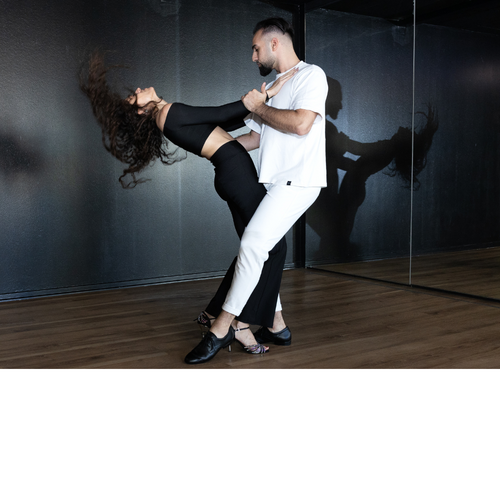
Ein Mann und eine Frau tanzen fröhlich zusammen auf einer Straße in der Stadt im Sonnenlicht.

Posture and body tension

  • Imagine an invisible thread pulling you upwards from the crown of your head - this gives you length and presence.
  • Let your shoulders hang loosely - don't tense up, but don't sink in either.
  • Keep your pelvis neutral - i.e. neither tilted forwards nor backwards.
  • Activate your core (tighten your stomach slightly) - this is your inner center of strength and your most important pivot anchor.
  • This basic tension gives you stability and protects you from losing control when turning.

Person mit braunen Absätzen, die auf einem Holzboden tanzt, wobei nur Beine und Rock sichtbar sind.

Foot technique and weight shifting

  • The pivot point is on the ball of the foot - i.e. the front part of the foot.
  • Lift your heels slightly - especially when turning quickly.
  • Make sure that your weight is always clearly on one foot - never on both at the same time, otherwise you will become "sticky".
  • Invest in Dance shoes with leather solescomfortable heeled shoes reduce friction and support controlled rotations.
Ein unscharfes Bild von zwei tanzenden Menschen vor einem schlichten Hintergrund.

Head and orientation (spotting)

  • When shooting, deliberately focus on a fixed point, the fixed point, at eye level.
  • Keep your gaze there for as long as possible - then the head will follow with a jerk.
  • This technique, known as spotting, helps you to keep your balance and avoid dizziness.
  • It is particularly essential for multiple spins and spins.

Step-by-step instructions for practicing twists

Want to get started right away? Here comes your turning training - step by step:

Preparation: warm-up and suitable music

Before you start, warm up your joints and muscles - especially your ankles, hips and back. Choose music with a clear beat, e.g. salsa basic or slow bachata, to focus on technique rather than tempo.

Turning technique while standing (solo)

Start without a partner:

1. stand hip-width apart, weight on the balls of your feet

2. pull your stomach in slightly, arms in dance position

3. focus your spot

4. turn once around your own axis - consciously, slowly, in a controlled manner

Repeat the whole thing with half, full and double twists. Pay attention to your balance.

Practicing turns while walking or with a partner

Couple dance brings leadership and a sense of space
added:

Follower: Prepare your turn with tension in your arm - don't let yourself be pulled.

LeaderLead clearly, but not with force - the impulse comes from the wrist.

Both: Pay attention to the line - do not circle, but turn on the point.

What are typical beginner's mistakes and how do you avoid them?

1. lean backwards

2. weight too far back

3. no spotting

Do you recognize yourself? No problem - everyone starts somewhere. The important thing is to keep at it.

Eine aufgerollte lila Yogamatte und ein geschlossener Laptop auf einer senfgelben Couch mit Kissen und einer grünen Pflanze.

Can I practise turns at home while dancing?

Yes, you can practise turns even without a dance studio - with small aids and clear goals: A mirror, for example, shows you posture and symmetry. Mark a point on the floor for your starting position. If necessary, use a small swivel stool or yoga block for specific exercises. Of course, you can also dress up at home and look your best. Dance dress to enjoy your spins even more.

Exercise 1: Simple mocking exercise for the head

1. stand in front of a point on the wall

2. turn your body, keeping your gaze on the point for as long as possible.

3. as soon as it is no longer possible to turn the body without bending, the first thing to do is to snap the head around and look for the point again.

4. the body follows.


This exercise reduces dizziness and improves your precision.

Exercise 2: Training weight transfer with a turntable or without aids

Consciously switch your weight from one foot to the other before you turn. If you want, you can do a Balance disc or turntable use - optional, but effective.

Exercise 3: Control and posture through "slow turns"

Perform a slow turn - consciously, with body tension. Goal: Maintain control in every phase, not just at the start.

2 tips from dance professionals: how to turn more safely

Experienced dancers know what it takes to
arrives. These are the two ultimate dance tips from our professionals:


  1. Breathe consciously and regularly - this stabilizes your nervous system and improves
    your balance.
  2. Quality before quantity! Three sessions of 15-20 minutes each per week are a good
    Start. Better to be regular and concentrated than tired and tired for hours on end.
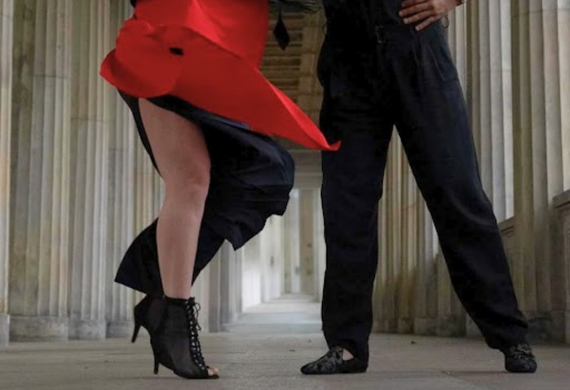
Zwei Personen tanzen, die eine in einem roten Kleid und hochhackigen Schuhen, die andere in schwarzen Hosen und Schuhen, in einem Säulengang.

Practice your turns while dancing and keep at it!

When you practise spins while dancing, you need good technique and every successful spin is like a little round of applause to yourself. You grow with every attempt. So: stand up, focus your gaze - and spin. Step by step, move by move.

Search

Shopping cart

Your shopping cart is empty.

Sorry, we could not find any products in your shopping cart.

Continue shopping